

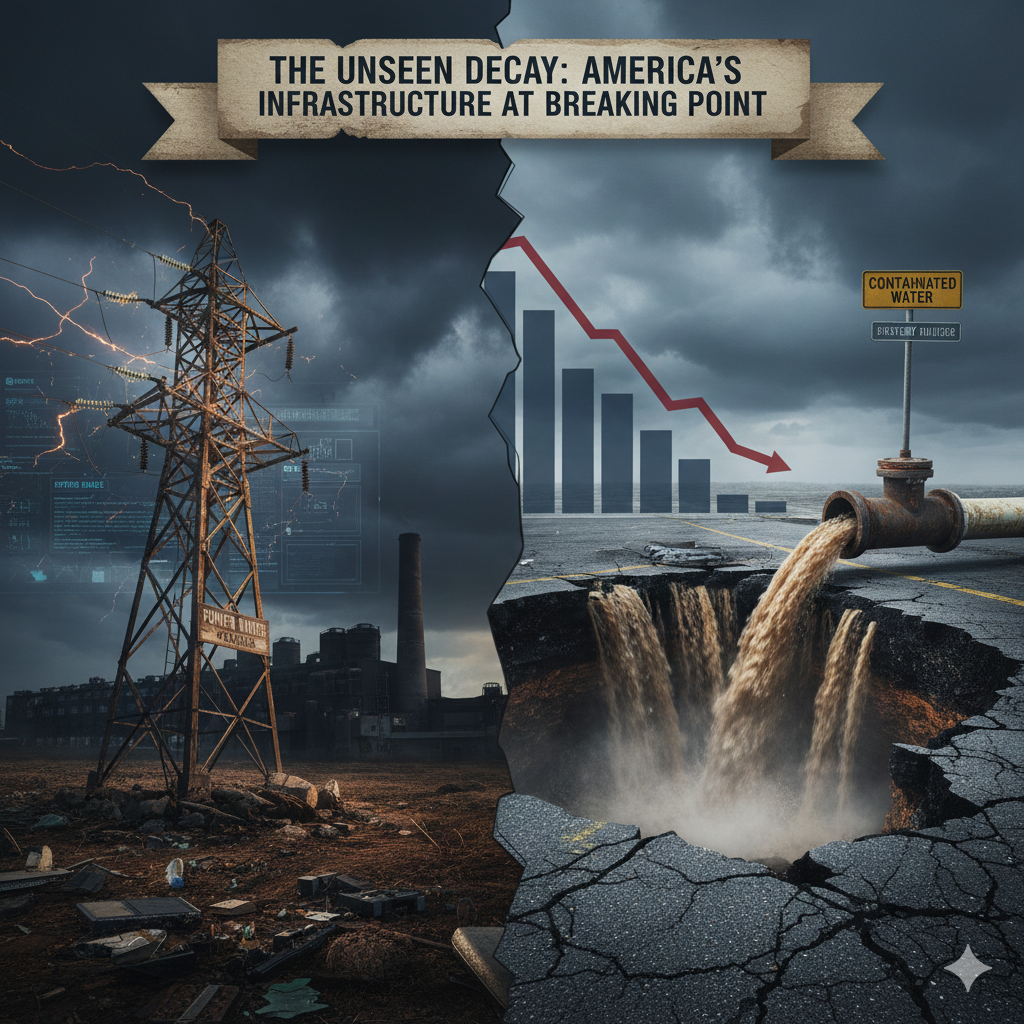
America’s infrastructure, once the envy of the world, is now a creaking, aging system silently eroding our economic stability. The neglect of our electrical grid and water systems, in particular, poses an existential threat, far outweighing many of the more visible economic concerns of the decade. This isn’t just about inconvenience; it’s about the very foundation of our modern economy.
The Looming Darkness: A Fragile Electrical Grid
Our electrical grid is a marvel of engineering, but it’s also a relic. Much of it was built in the mid-20th century, designed for a different era with far less demand and without the complexities of modern digital life or climate change.
- Frequent Outages: Aging transformers, transmission lines, and substations are prone to failure, leading to more frequent and longer power outages. Each outage translates directly into lost productivity for businesses, spoiled goods, and halted economic activity.
- Vulnerability to Cyberattacks: An outdated grid is an insecure grid. Its reliance on older technology makes it a prime target for cyber warfare, which could cripple critical services and cause widespread economic chaos.
- Lack of Modernization: The grid struggles to integrate renewable energy sources efficiently and lacks the “smart” technology needed to dynamically manage demand and prevent cascading failures. This inefficiency drives up energy costs and hinders sustainable growth.
- Economic Ripple Effect: From manufacturing plants to data centers, every sector relies on a stable power supply. A compromised grid means compromised production, innovation, and competitiveness on a global scale.
The Ticking Time Bomb: Crumbling Water Systems
Beneath our streets, an invisible crisis is unfolding. Miles of aging pipes, some over a century old, are failing, leading to massive water loss, contamination risks, and exorbitant repair costs.
- Water Main Breaks: Every day, thousands of water main breaks disrupt communities, cause property damage, and waste billions of gallons of treated water. The cost of emergency repairs and water loss alone is staggering.
- Health Risks & Contamination: Deteriorating pipes can leach harmful substances (like lead) into drinking water, as seen in Flint, Michigan. This leads to public health crises, loss of trust, and massive societal costs.
- Wasted Resources & Energy: Leaky pipes mean that immense amounts of energy used to pump and treat water are wasted. This drives up utility bills for consumers and businesses.
- Hindered Development: Businesses and communities need reliable, clean water to thrive. An unreliable system can deter investment and hinder urban development, stifling economic growth.
- The Cost of Inaction: Proactive replacement and maintenance are far cheaper than emergency repairs and dealing with the aftermath of system failures. Yet, investment consistently lags behind need.
The Unavoidable Price Tag: Economic Consequences
Neglecting these vital systems isn’t saving money; it’s incurring a massive debt that future generations will have to pay, with interest.
- Lost Productivity: Businesses cannot operate without reliable power and water, leading to billions in lost revenue and wages.
- Increased Costs for Consumers: Utility companies pass on the costs of emergency repairs and inefficient systems to consumers through higher bills.
- Reduced Competitiveness: A nation with unreliable infrastructure struggles to attract and retain businesses compared to countries with modern, robust systems.
- Public Health Crises: Water contamination and lack of essential services lead to increased healthcare costs and a reduced quality of life.
- Environmental Impact: Leaks and inefficiencies in both systems contribute to resource depletion and environmental damage.
A Call to Action: Investing in Our Future
The crisis of aging infrastructure is not a partisan issue; it’s an American issue. Addressing it requires sustained, bipartisan commitment and significant investment. Prioritizing the modernization of our electrical grid and water systems is not just an expense; it’s an investment in economic resilience, public health, and national security. The cost of inaction far outweighs the cost of repair. The time to act is now, before the unseen decay leads to an undeniable collapse.