

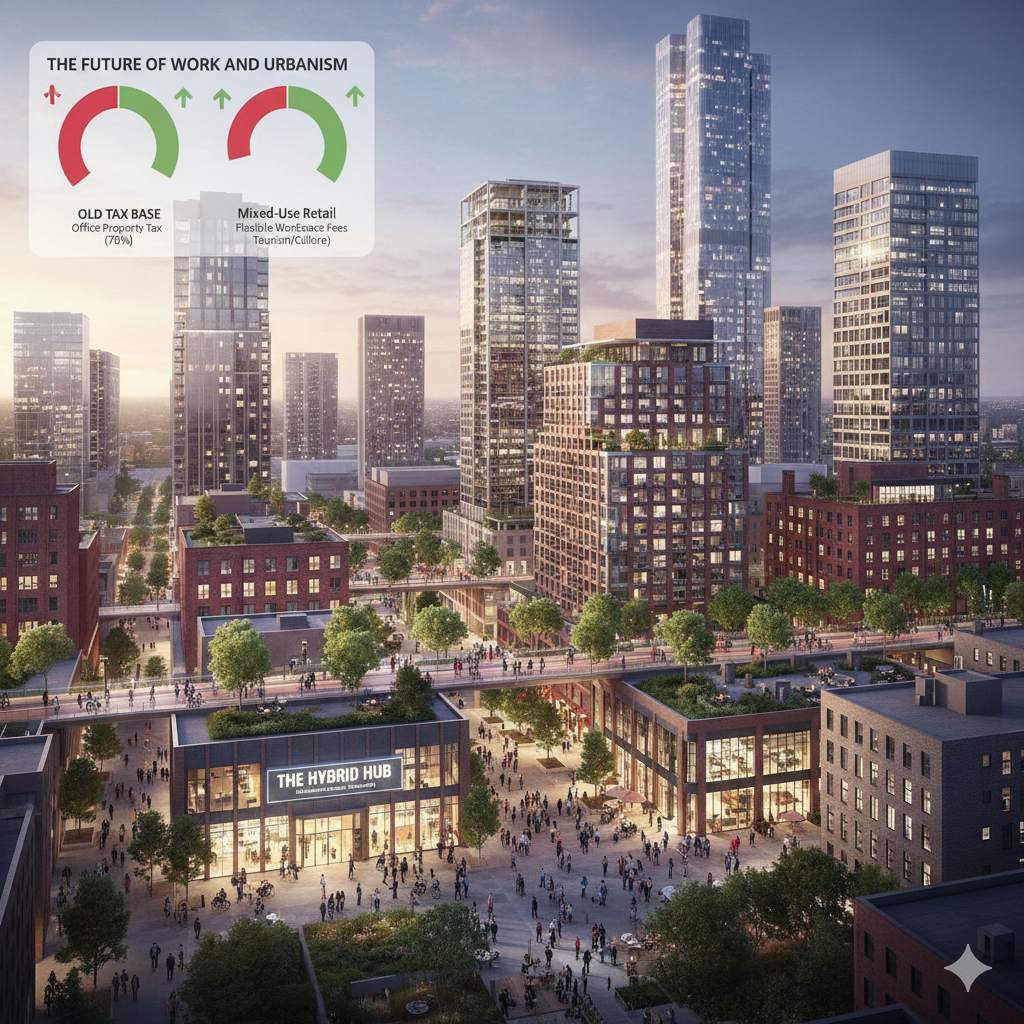
The scent of freshly brewed coffee, the hum of collaboration, the vibrant energy of a bustling city street—these were once synonymous with the daily grind of office life. But the seismic shift to hybrid work, accelerated by recent global events, has permanently altered this landscape. Far from a temporary blip, the hybrid model is now a powerful force reshaping the very foundations of commercial real estate and recalibrating the local tax bases that underpin our urban centers.
The Great Rethink: Offices as Destinations, Not Just Destinations
For decades, commercial real estate operated on a relatively predictable model: build large, centralized office buildings, and businesses would fill them with employees. The rise of hybrid work has shattered this simplicity, demanding a fundamental rethink of what an office truly is and what purpose it serves.
- From “Heads Down” to “Hubs Up”: The traditional office, designed for individual, heads-down work, is evolving into a dynamic “hub.” These hubs are curated spaces optimized for collaboration, innovation, team building, and mentorship—activities that are harder to replicate remotely.
- The “Experience” Economy of the Office: Employers are realizing that attracting employees back to the office requires more than just a desk. Amenities like on-site fitness centers, gourmet food options, green spaces, and even concierge services are becoming crucial differentiators. The office must be a compelling “experience.”
- Flexibility as a Feature: Short-term leases, co-working spaces, and “flex space” providers are gaining traction. Businesses, wary of long-term commitments in an uncertain future, are seeking agile solutions that mirror their hybrid work policies.
- Decentralization and the Rise of the ‘Hub-and-Spoke’ Model: Instead of one massive central headquarters, companies are exploring multiple smaller offices strategically located in different neighborhoods or even suburbs, offering employees more convenient options closer to home.
Commercial Real Estate: A Market in Metamorphosis
The impact on commercial real estate is multifaceted and, in many cases, still unfolding. We are witnessing a clear divergence in fortunes within the sector.
- The Winners: Class A and Flex Spaces: Premium, amenity-rich Class Office buildings, particularly those in desirable urban locations or with excellent transit access, are proving more resilient. Similarly, flexible office spaces designed for hot-desking and collaboration are in high demand.
- The Challengers: Older, Undifferentiated Buildings: Older, less appealing office buildings, often referred to as Class B or C, face significant challenges. They lack the amenities and modern infrastructure needed to attract a hybrid workforce and are increasingly vulnerable to vacancy.
- The Conversion Conundrum: Many cities are exploring the conversion of underutilized office buildings into residential units or mixed-use developments. While offering a potential solution to urban housing shortages and revitalizing downtowns, these conversions are complex, costly, and not always feasible.
- Shifting Investment Strategies: Investors are recalibrating their portfolios, moving away from purely office-centric investments and exploring opportunities in sectors like industrial logistics (driven by e-commerce), data centers, and specialized life sciences facilities.
The Ripple Effect: Local Tax Bases Under Pressure
The changes in commercial real estate have significant implications for local government finances. Property taxes on commercial buildings are a cornerstone of municipal budgets, funding essential services like schools, infrastructure, and public safety.
- Declining Property Values: Increased office vacancies and the downward pressure on rents for less desirable spaces can lead to lower property valuations. This directly translates to reduced property tax revenues for cities.
- The Commuter Tax Conundrum: Many cities rely on taxes from commuters (e.g., sales taxes, transit fares, parking fees). Fewer people commuting daily means a reduction in these crucial revenue streams.
- Revitalization Efforts and Incentives: Cities are now actively pursuing strategies to mitigate these impacts. This includes offering tax incentives for office-to-residential conversions, investing in public spaces to attract residents and businesses, and exploring new tax structures.
- The Mixed-Use Imperative: Urban planners are increasingly advocating for mixed-use developments that integrate residential, retail, office, and green spaces. These create more resilient urban environments less reliant on a single economic driver.
Navigating the New Urban Frontier
The hybrid model is not just a trend; it’s a fundamental shift in how we work and live. For commercial real estate owners, developers, urban planners, and municipal governments, the imperative is clear: adapt or risk being left behind.
- Embrace Data and Analytics: Understanding occupancy rates, peak usage times, and employee preferences is crucial for optimizing space and making informed investment decisions.
- Prioritize Sustainability and Wellness: Green buildings, ample natural light, and spaces that promote employee well-being are no longer luxuries but necessities in attracting a modern workforce.
- Foster Collaboration Between Public and Private Sectors: Successful urban transformation will require close partnerships between city officials, real estate developers, and businesses to reimagine and revitalize urban cores.
- Reimagine the Role of the City: Cities must evolve from simply being places of work to vibrant, livable communities that offer a compelling mix of cultural experiences, residential options, and diverse economic opportunities.
The future of work is undeniably hybrid, and with it comes a reimagined urban landscape. The challenges are significant, but so are the opportunities to create more dynamic, sustainable, and equitable cities for generations to come.