In an increasingly digital world, our senses crave real, tangible experiences. This desire extends to our living spaces, where the sterile perfection of flat, untextured walls is giving way to a more tactile and sensorial approach to design. The “Power of Texture” lies in its ability to evoke emotion, add depth, and create a truly immersive environment. This article explores how limewash paint and grooved panel finishes are leading this revolution, transforming ordinary walls into captivating, touchable canvases.
Why Texture Matters: Engaging the Senses
For decades, interior design often prioritized visual aesthetics above all else. However, a truly exceptional space engages more than just our sight. Texture adds a crucial, often overlooked, layer of sensory experience:
- Visual Depth and Interest: Textured surfaces play with light and shadow in dynamic ways, adding dimension that flat surfaces simply cannot. They create visual movement and prevent a room from feeling monotonous.
- Tactile Engagement: There’s an undeniable urge to touch a textured wall. This tactile experience creates a deeper connection to the space, making it feel more grounded and authentic.
- Acoustic Benefits: Some textured surfaces can subtly improve a room’s acoustics by diffusing sound, contributing to a more comfortable and quieter atmosphere.
- Emotional Connection: Textures can evoke specific feelings. Rough textures might feel earthy and grounding, while smooth, undulating patterns can feel calming and fluid. They add a layer of personality and warmth that goes beyond color alone.
- Hiding Imperfections: The inherent irregularities of textured finishes are forgiving, expertly camouflaging minor wall imperfections far better than a flat, unforgiving paint job.
Limewash Paint: A Lived-In Legacy
Limewash paint is experiencing a massive resurgence, and for good reason. Far from a trendy fad, this ancient finish offers a timeless elegance and an unparalleled sensorial experience.
What is limewash paint?
Limewash is a natural paint made from aged lime, water, and natural pigments. Unlike modern paints that form a film on the surface, limewash penetrates the substrate, creating a breathable, matte finish with subtle, soft mottling and movement.
The Sensorial Appeal of Limewash:
- Velvety Softness: Limewash has a unique, chalky-soft feel that invites touch. It’s not harsh or rough but rather subtly textured and inviting.
- Ethereal Depth: Its translucent nature allows for layers of color to peek through, creating an incredible depth and a painterly, cloud-like effect. This isn’t a flat color; it’s a living surface that changes with the light.
- Organic Movement: The characteristic brushstrokes and variations in tone give limewash a natural, organic flow, reminiscent of ancient plaster or sun-drenched European facades. It feels authentically “made by hand.”
- Breathable and Healthy: Being a natural product, limewash is inherently breathable, mold-resistant, and free from harsh chemicals, contributing to healthier indoor air quality and a more natural feel.
Design Versatility:
Limewash is incredibly versatile, fitting seamlessly into various design aesthetics, from rustic farmhouse to minimalist modern, bohemian, and classic European styles. It adds instant character and a sense of history to any space.
Grooved Panel Finishes: Modern Tactility
While limewash offers an organic, hand-crafted texture, grooved panel finishes provide a more structured yet equally captivating tactile experience. These finishes introduce linear, geometric, or undulating patterns to walls, transforming them into architectural features.
Types of Grooved Panels:
- Fluted Panels: Featuring rounded, convex grooves that create a soft, rhythmic wave effect.
- Reeded Panels: Characterized by sharp, concave grooves, offering a more defined and often elegant linear pattern.
- Shiplap/Tongue and Groove: Classic paneling styles that create horizontal or vertical lines with subtle reveals between boards, adding rustic charm or crisp modern definition.
- Milled Wood Panels: Custom-milled designs that can range from subtle undulations to intricate geometric patterns, offering bespoke texture.
The Sensorial Appeal of Grooved Panels:
- Rhythmic Flow: The repeating patterns of grooves create a visual and almost tactile rhythm that can guide the eye and add a sense of movement to a room.
- Shadow Play: Grooves excel at capturing and reflecting light, creating dynamic shadows that shift throughout the day, constantly changing the wall’s appearance. This interplay is a key sensorial element.
- Defined Structure: Unlike the organic fluidity of limewash, grooved panels offer a sense of order and architectural precision, yet still invite interaction through their three-dimensional form.
- Material Richness: Whether painted, stained, or left natural, the material itself (often wood, MDF, or plaster) contributes to the tactile experience, adding warmth and authenticity.
Design Impact:
Grooved panels can be used to add a feature wall, define zones in an open-plan space, create a cozy nook, or even add a subtle, sophisticated backdrop. They instantly elevate a room from flat to fabulous, making walls feel substantial and intentional.
Combining Textures for Ultimate Sensory Richness
The true “Power of Texture” often lies in thoughtful layering and combination. Imagine a living room with:
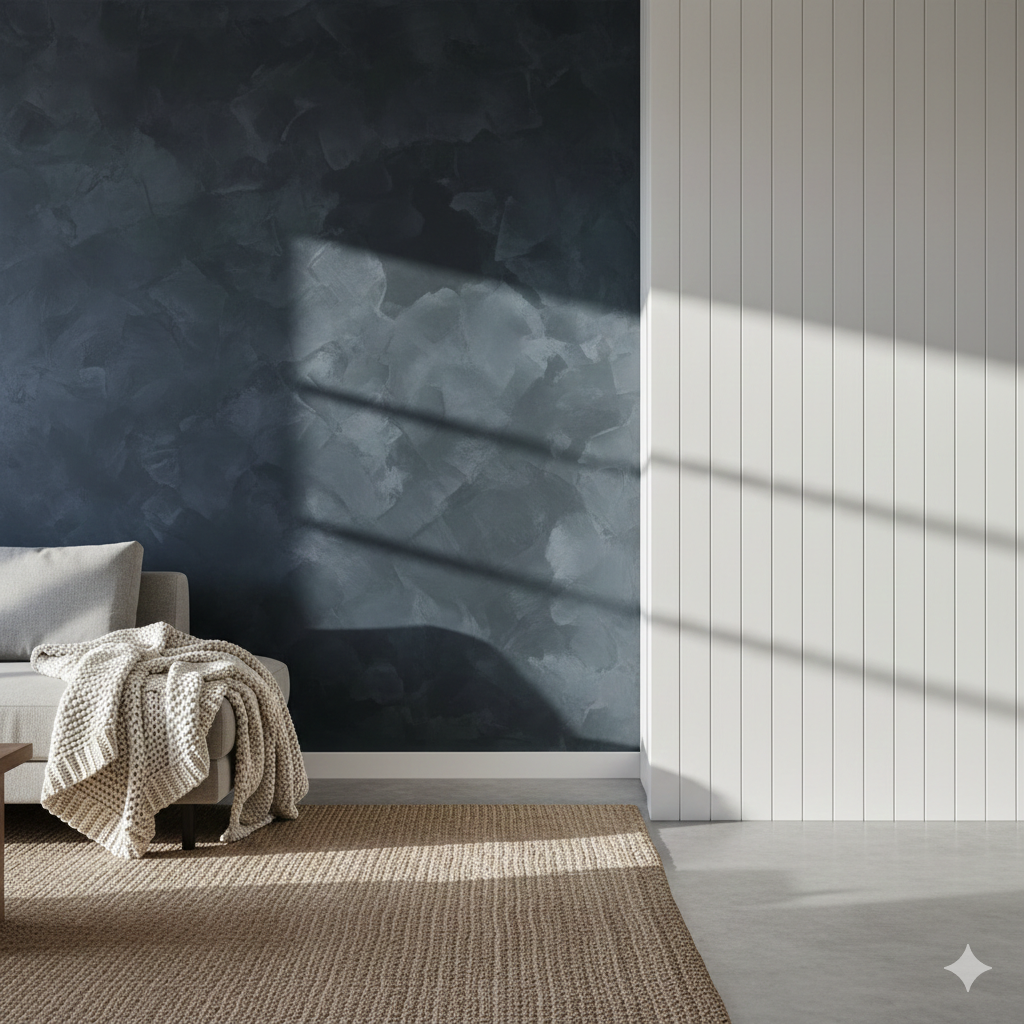
- A feature wall finished in a deep, moody limewash paint, offering a velvety, ancient feel.
- Adjacent walls treated with subtle fluted paneling, painted in a complementary tone, adding linear rhythm and refined structure.
- Textile elements like a chunky knit throw or a woven rug further enhance the tactile experience.
By consciously incorporating both the organic depth of limewash and the structural elegance of grooved panels, designers can create spaces that are not only visually stunning but also deeply engaging and satisfying on a sensorial level. Moving beyond flat walls isn’t just a trend; it’s a return to appreciating the rich, touchable world around us, one textured surface at a time.