

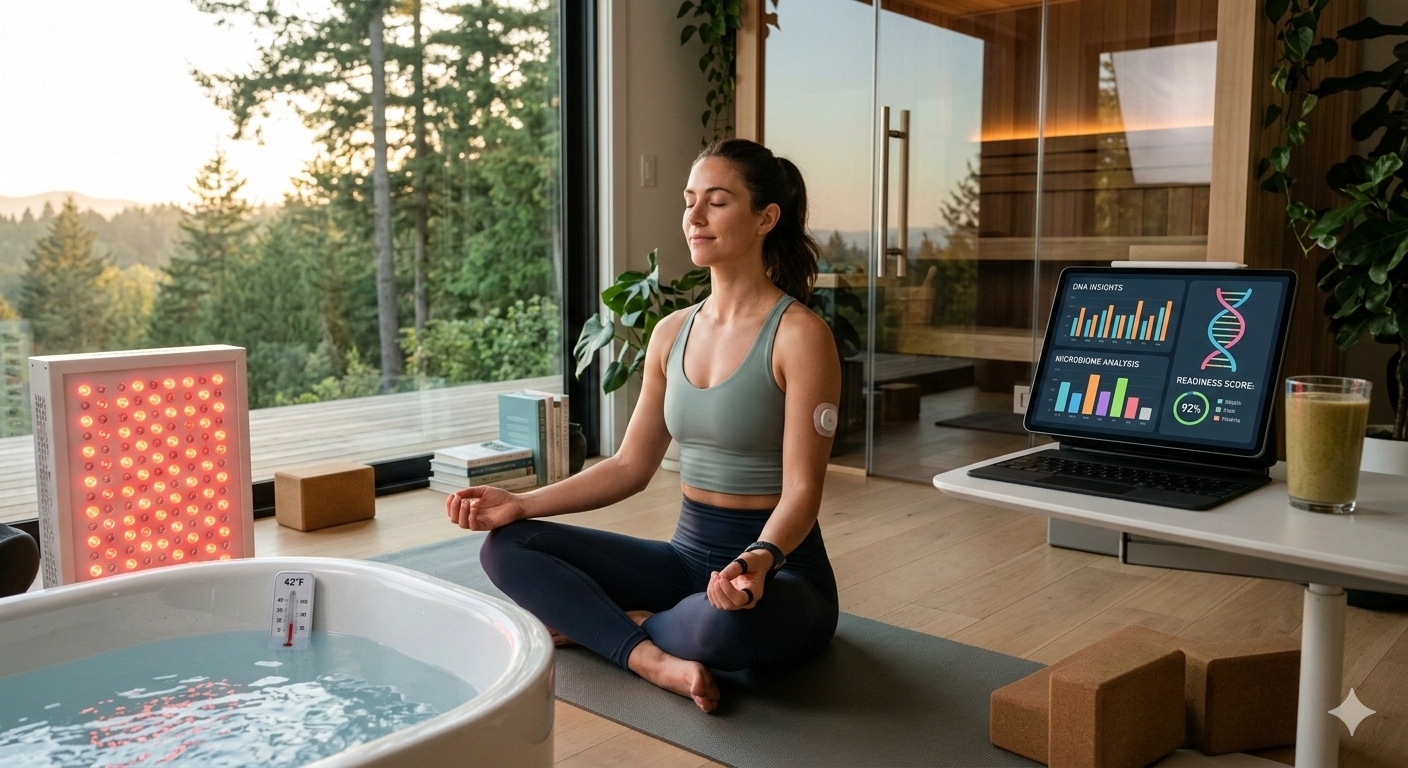
We are witnessing a profound shift in the wellness landscape. The “one-size-fits-all” approach of 10,000 steps and standard food pyramids is obsolete. Today, the cutting edge of health is defined by three converging pillars: radical personalization, proactive mental conditioning, and science-backed protocols for recovery and longevity.
This is not about chasing immortality; it is about extending our healthspan—the period of life spent in good health, free from chronic disease.
1. Personalized Health: The Blueprint Within Your DNA
The era of generic advice is over. We now have the tools to understand precisely how our unique biology interacts with the world around us.
Personalized health means moving from reactive treatment to proactive optimization, guided by data specific to you.
Decoding Your Unique Biology
The foundation of personalized health lies in two key areas:
- Nutrigenomics and DNA Testing: By analyzing your DNA, you can uncover genetic predispositions for nutritional deficiencies, metabolism rates, and potential sensitivities (e.g., how your body processes caffeine or lactose). This allows for diet and lifestyle plans that are genetically optimized.
- The microbiome analysis: Testing the trillions of bacteria in your gut reveals insights into your digestive health, immune function, and even how your body absorbs certain nutrients. Understanding your microbiome enables targeted probiotic and dietary strategies to improve overall function.
Wearable-Driven Interventions
The future of personalization lives on your wrist and under your skin:
- Continuous Glucose Monitors (CGMs): Previously for diabetics, non-diabetics are using CGMs to understand how specific foods, stress levels, and exercise affect their blood sugar in real time. This dynamic data prevents energy crashes and long-term metabolic dysfunction.
- Advanced Biometrics: Beyond step counting, new wearables track Heart Rate Variability (HRV), resting heart rate, and sleep cycles to provide a daily “readiness score,” telling you when to push hard and when to prioritize recovery.
2. Mental Fitness: Training the Brain for Resilience
For decades, “mental health” was associated almost exclusively with treating illness. The new paradigm, mental fitness, treats the brain as a muscle that must be proactively conditioned. Mental fitness is the capacity to handle stress, maintain focus, and navigate emotional challenges with agility.
Proactive Strategies for a Stronger Mind
Just as you go to the gym for your body, you must “train” your brain:
- Mindfulness and Meditation: Studies show that consistent mindfulness practice physically changes the brain’s structure (neuroplasticity). It shrinks the amygdala (responsible for the fear response) and thickens the prefrontal cortex (responsible for executive function, focus, and emotional regulation).
- Cognitive Training (Brain Games): Engaging in activities that challenge memory, problem-solving, and processing speed (like learning a new language or sophisticated puzzles) can enhance “cognitive reserve,” delaying age-related cognitive decline.
The Role of Neurofeedback
- Real-Time Brain Training: Neurofeedback technology uses EEG sensors to show users their brainwave activity in real time. By receiving immediate feedback (often via visual or auditory cues), individuals can learn to consciously self-regulate their brain states, improving focus, reducing anxiety, and enhancing sleep quality.
3. Recovery and Longevity: The Science of High Performance
Recovery is no longer passive. It is a calculated, strategic part of any high-performance (or high-longevity) lifestyle. The goal of longevity science is to slow down biological aging at the cellular level.
Sleep: The Non-Negotiable Foundation
You cannot out-diet or out-train poor sleep. Sleep is when the body repairs tissue and the glymphatic system cleans the brain of toxins.
- Optimizing the Sleep Environment: To ensure deep, restorative sleep, the latest research suggests creating a sleep “cave”: temperatures between 60 and 67°F (15 and 19°C), complete blackout conditions, and minimizing blue light exposure at least 90 minutes before bed.
- Tracking Sleep Architecture: High-end wearables can now accurately track the percentage of time spent in REM, deep, and light sleep, helping you identify what factors disrupt your recovery cycles.
Science-Backed Physical Interventions
Modern recovery leverages specific stressors to activate the body’s innate repair mechanisms (a concept known as hormesis):
- Deliberate Cold Exposure: Ice baths and cold showers stimulate the production of norepinephrine (focusing chemical), boost metabolism, and activate “brown fat.” Crucially, they significantly reduce full-body inflammation.
- Sauna and Heat Therapy: Regular sauna use mimics a moderate aerobic workout, improving cardiovascular health. It also triggers the production of heat shock proteins, which repair misfolded proteins in the cells—a critical process for longevity.
- Red Light Therapy (Photobiomodulation): Using specific wavelengths of red and near-infrared light, this therapy stimulates mitochondria (the cellular power plants) to produce more ATP (energy). This accelerates tissue repair, reduces muscle soreness, and improves skin health.
Conclusion: The New Definition of Vitality
The merging of personalized data, proactive mental training, and sophisticated recovery protocols represents the greatest leap in human health management. By embracing these tools, we move beyond simply avoiding disease and step into a life of optimized vitality, resilience, and extended healthspan.