
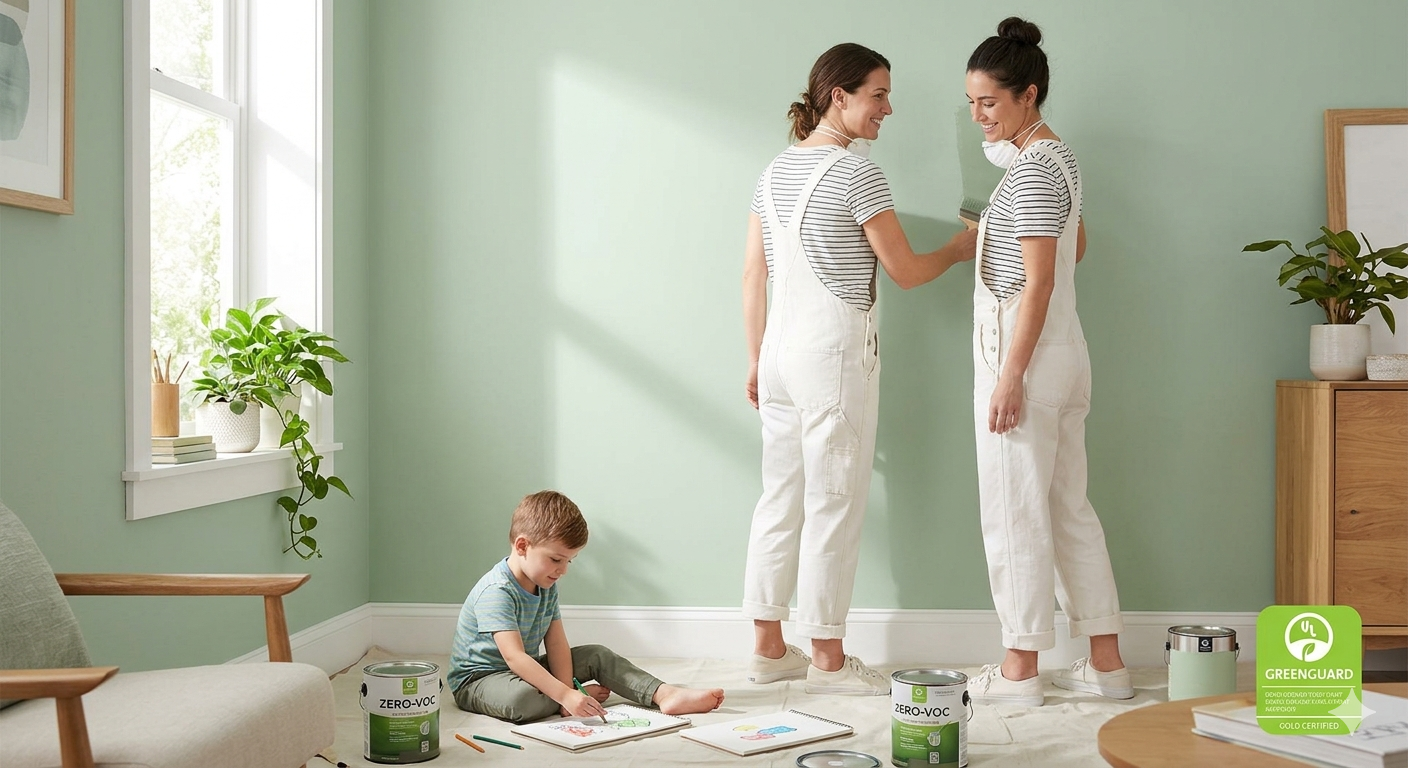
That “new paint smell” we’ve all grown accustomed to is actually the scent of volatile organic compounds (VOCs) off-gassing into your home. While it might smell like a fresh start, those chemicals can linger for years, impacting your indoor air quality and your health.
If you’re looking to refresh your space without the chemical cocktail, here is everything you need to know about choosing the right paint for a truly fresh home.
What Exactly Are VOCs?
Volatile organic compounds are carbon-based chemicals that evaporate at room temperature. In traditional paints, they act as solvents that help the paint stay fluid in the can and spread evenly on the wall.
The Hidden Impact
- Immediate Effects: Headaches, dizziness, watery eyes, and respiratory irritation.
- Long-term Risks: Chronic exposure is linked to liver and kidney damage, as well as aggravated asthma and “Sick Building Syndrome.”
- Environmental Toll: VOCs contribute to the formation of ground-level ozone (smog) when they react with sunlight.
Navigating the Labels: Low vs. Zero
Not all “eco-friendly” paints are created equal. It’s important to understand the thresholds set by regulatory bodies like the EPA.
| Feature | Low-VOC Paint | Zero-VOC Paint |
|---|---|---|
| VOC Content | Typically < 50 g/L | Typically < 5 g/L |
| Odour | Minimal “chemical” scent | Virtually odourless |
| Best For | High-traffic areas, kitchens | Nurseries, bedrooms, sensitive individuals |
| Dry Time | Standard | Often faster than traditional paint |
Export to Sheets
Pro Tip: Even “Zero-VOC” paint can gain VOCs once the colorant (tint) is added at the store. Always ask for Zero-VOC colorants to ensure the final product stays as pure as possible.
Why You Should Make the Switch
Beyond just “breathing easier,” low-emission paints offer several practical advantages for the modern homeowner:
- Faster Re-entry: You don’t have to wait days for a room to “air out.” You can often sleep in a freshly painted bedroom the same night.
- Superior Performance: Modern low-VOC formulas have evolved. They now offer excellent hide, scrubbability, and color retention that rivals traditional oil-based paints.
- Non-Yellowing: Unlike older oil-based paints, many low-VOC acrylics won’t yellow over time.
- Sustainable Living: Choosing these products supports manufacturers who prioritize green chemistry and reduced carbon footprints.
Look for the “Gold Standard” certifications.
Don’t just take the manufacturer’s word for it. Look for independent, third-party seals of approval on the can:
- GREENGUARD Gold: One of the strictest standards in the world; ensures the product is safe for use in “sensitive” environments like schools and hospitals.
- Green Seal (GS-11): Benchmarks the product for performance (washability, hide) as well as low chemical content.
- MPI Extreme Green: Indicates the product meets the highest environmental standards without sacrificing professional-grade durability.
Top Recommendations for Your Next Project
If you’re ready to pick up a brush, these brands are leading the charge in indoor air quality:
- Benjamin Moore Natura/Eco Spec: Widely considered the gold standard for zero-emissions and zero-VOC colorants.
- Sherwin-Williams Harmony: Contains technology that actually helps reduce existing odors and formaldehyde from other sources (like carpet or insulation).
- Behr Premium Plus: An accessible, budget-friendly Zero-VOC option available at most hardware stores.
- Clare Paint: A modern, direct-to-consumer brand that is GREENGUARD Gold certified and focuses on curated, designer-led colors.
Final Checklist for a Healthy Paint Job
- [1] Ventilate anyway: Even with zero-VOC paint, keep windows open to manage humidity and dust.
- [2] Check the tint: Confirm the store is using low-VOC or zero-VOC tints.
- [3] Dispose properly: Never pour leftover paint down the drain. Let it dry out or take it to a local hazardous waste recycling center.
- [4] Prime smart: Don’t undo your hard work by using a high-VOC primer. Match your primer’s VOC level to your topcoat.
Making the switch to low-VOC paint isn’t just a design choice—it’s a wellness choice. Your lungs (and your walls) will thank you.